ClickCease

Lightning Protection System Recertification

Confidence for Audits, Insurers, and Operations

A system installed correctly five, ten, or twenty years ago isn't necessarily a system that still performs today. Facilities change, components age, and — sometimes without anyone realizing it — unauthorized modifications creep in over the years. Recertification is how you close that gap between assumed protection and verified protection, with documentation to back it up.

Many facilities require documented proof that critical protection systems remain functional, especially in regulated or high-risk industries where an assumption isn't good enough for an auditor, an insurer, or a board. LEC's system recertification services provide that assurance, backed by the same engineering rigor as a new installation.

What Recertification Confirms

  • Design conformity. DAS® units remain installed per the original design.
  • Grounding performance. Grounding systems remain within acceptable performance ranges.
  • System integrity. No unauthorized modifications have compromised system effectiveness.
  • Component replacement. Any damaged components are replaced with new parts meeting design specifications.

When Recertification Makes Sense

  • After a major storm event or any suspected lightning strike near the facility
  • Following facility renovations, additions, or changes to the roofline or structure
  • As part of a scheduled interval tied to your insurance, regulatory, or internal risk requirements
  • Ahead of an audit, ownership change, or insurance renewal where documentation will be reviewed

Who Benefits

For operators, recertification supports operational continuity and peace of mind between major inspections. For insurers, regulators, and other stakeholders, it provides independent, engineering-backed confidence that lightning risk mitigation remains fully intact, not just installed once and forgotten.

Documented Assurance

Recertification gives auditors, insurers, and risk managers a clear, dated record that your lightning protection system continues to meet LEC's engineering standards — backed by more than 150 years of combined field experience.

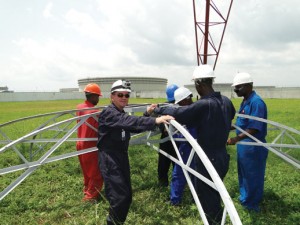
Lightning Protection

Exxon Mobil Nigeria Hemisphere Assembly 2011

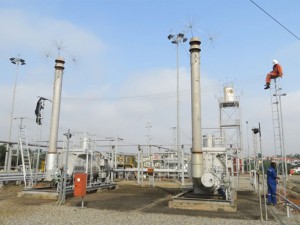
Lightning Protection

DAS Installation – Nigerian Gas Company, Lagos Industrial Area 2012

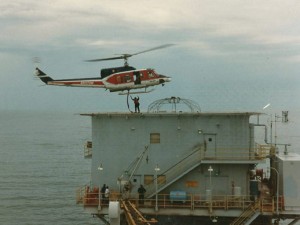
Lightning Protection

DAS Hemisphere Array Helicopter Installation – Texaco, Nigeria 2012

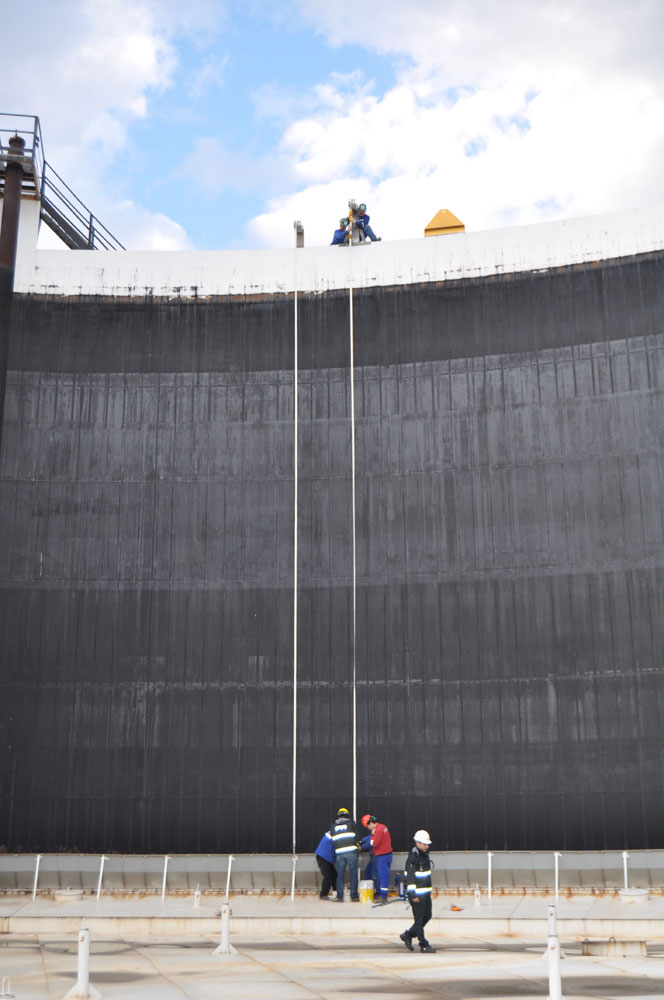
Lightning Protection

RGA Installation – Tupras, Izmit, Turkey 2013

Lightning Safety

LIGHTNING PROTECTION SERVICES

We all know that lightning is dangerous, so it only makes sense to understand the different ways of protecting oneself.

When you are outside:
• Stay away from concrete walls and floors. The metal wires and bars inside them are good conductor of electricity.
• Trees are not safe as well. The moisture within it or in between the bark and wood are easy accessible path for a lightning strike to ground itself.
• Avoid leaning against vehicles. Though you can take shelter inside the vehicle; just roll up the windows and avoid touching the metal frame or the steering wheel.
• Stay away from shorelines, railroad tracks, metal fences, flagpoles, or poles.

LIGHTNING PROTECTION SERVICES

What is the best thing to do?
The best thing to do when you are caught outside during a thunderstorm is to squat down on the balls of your feet with as little contact with the ground as possible. Wait for the thunderstorm to pass before moving.
However, looking out for the warning signs and taking appropriate measures is always in better than being caught in a storm. Watch for an ominously darkening sky, crackling sound on AM radio or hear the weather forecast before venturing out.

LIGHTNING PROTECTION SERVICES

When you are inside:
The safest place to be during a thunderstorm is indoors. Most houses and buildings are now protected by Lightning rods that direct the current safely to the ground. Still to ensure maximum lightning safety:

• Avoid using any wired appliances or devices
• Don’t take a bath and stay away from any water body
• Electrical wiring is equally dangerous
• Keep all windows and doors closed

LIGHTNING PROTECTION SERVICES

However, these rods do not provide maximum lightning safety. Now, with the development of technology the new lightning ‘safety’ rod can deter the clouds form ‘striking’ altogether.

This technology – the Dissipation Array System (DAS) reduces the electrical fields in a storm, preventing the protected area from experiencing a lightning strike. This proven method since 1971 is now been used to protect residential, commercial and industrial facilities. Patented by LEC, it comes with a ‘No-Strike’ Warranty.

LIGHTNING PROTECTION SERVICES

Gathering it all together:
• When no shelter is available, get low to the ground without lying flat
• Avoid water bodies like swimming pool and lake
• Close doors, windows, and electronics when indoors
• When inside a vehicle, roll up the windows and do not touch the metal frame
Last but not the least, install a lightning protection system with DAS technology and secure your home and peace of mind.