- We Prevent Lightning Related Problems.


Lightning Protection: Ensuring Operational Continuity and Safety in Critical Facilities
March 12, 2026Are Internal Floating Roof Tanks (IFRTs) Safe From Lightning?
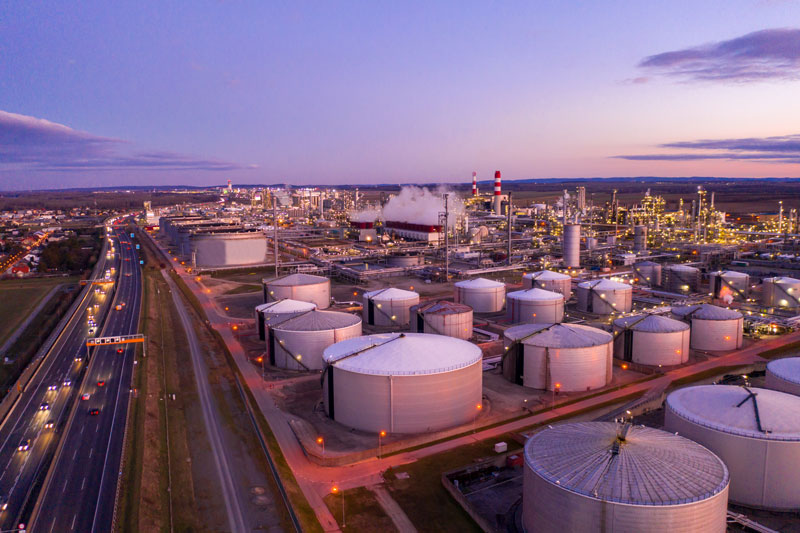
Internal Floating Roof Tanks (IFRTs) are widely used across refineries and oil terminals because they reduce vapor space, lower emissions, and are designed to minimize ignition risk. On paper, they look like a safer alternative to external floating roof tanks.
But when it comes to lightning, many operators are operating under a dangerous assumption.
IFRTs are not immune to lightning-related events. In fact, they remain highly vulnerable to:
- Direct lightning strikes
- Lightning-induced arcing across rim seals
- Static discharge events
- Ignition of flammable vapors
And when ignition occurs, consequences escalate quickly.
How Lightning Impacts Internal Floating Roof Tanks
An IFRT may have a fixed roof, but that does not eliminate lightning risk. A strike to the tank shell, roof, or nearby structure can introduce enormous electrical energy into the system. That energy seeks a path to ground. If bonding, grounding, or seal conductivity is inadequate, the result can be:
- Arcing across rim seals
- Sustained electrical discharge
- Ignition of flammable vapor inside the tank
- Rim seal fires that spread or re-flash
Even if a fire is contained, the downstream impact can include tank damage, product loss, regulatory scrutiny, unplanned shutdowns, and significant safety exposure for personnel.
The reality is simple: lightning does not have to directly “hit the floating roof” to create an ignition event.
A Real-World Wake-Up Call
In one documented case, a lightning strike hit an IFRT containing naphtha at a crude oil refinery. The strike resulted in ignition within the tank.
Within days of the incident, the refinery operator reached out to us to design, develop, install, and maintain a comprehensive lightning protection strategy for their tank farm.
This was not about adding another conventional lightning rod.
It was about engineering a layered solution designed to:
- Reduce the likelihood of lightning attachment
- Control and safely manage electrical energy
- Protect operational continuity
- Safeguard personnel who must remain on site during storm activity
- Protect high-value storage assets
The system incorporated the patented Dissipation Array® System (DAS®) to help prevent lightning formation in the protected zone, along with the Gen 2 Retractable Grounding Assembly® (RGA®) to enhance bonding and grounding reliability.
The objective was clear: stop lightning before it forms whenever possible, and safely manage the rare event that penetrates the protected zone.
Why Conventional Protection Isn’t Enough
Traditional lightning rods are designed to attract lightning and conduct strikes safely to ground. A key vulnerability of traditional lightning rods and similar technologies is that they attract lightning into the area intended to be protected!
In high-value tank farms storing volatile hydrocarbons, that approach alone may not sufficiently address:
- Vapor ignition risk
- Rim seal arcing
- Static accumulation
- The operational and financial consequences of downtime
For facilities where uptime, safety, and regulatory compliance are mission-critical, lightning protection must be engineered as a system, not installed as an afterthought.
Don’t Wait for the Next Strike
IFRTs are designed to reduce emissions and vapor risk — but they are not inherently protected from lightning-induced ignition events.
A single storm can expose vulnerabilities that were never considered in the original design.
Don’t wait for the next strike to expose a weakness in your tank farm.
Read the case study today to see how we engineered a comprehensive lightning protection solution including both lightning prevention technology and reliable grounding to help prevent lightning formation and safely manage electrical energy in a high-risk refinery environment.
Because when lightning strikes, assumptions fail fast. Engineering and experience is what protects you.
READ MORE: Tank Farm Lightning Protection – a Calcasieu Refining Case Study


