- We Prevent Lightning Related Problems.


Telluride Gondola Transit Company Selects Lightning Eliminators to Protect Guests and Crew
May 13, 2026
Lightning Strike Prevention: Dissipation Array® System Configurations for Oil Storage Sites
July 22, 2026Grounding and Bonding Floating Roof Storage Tanks
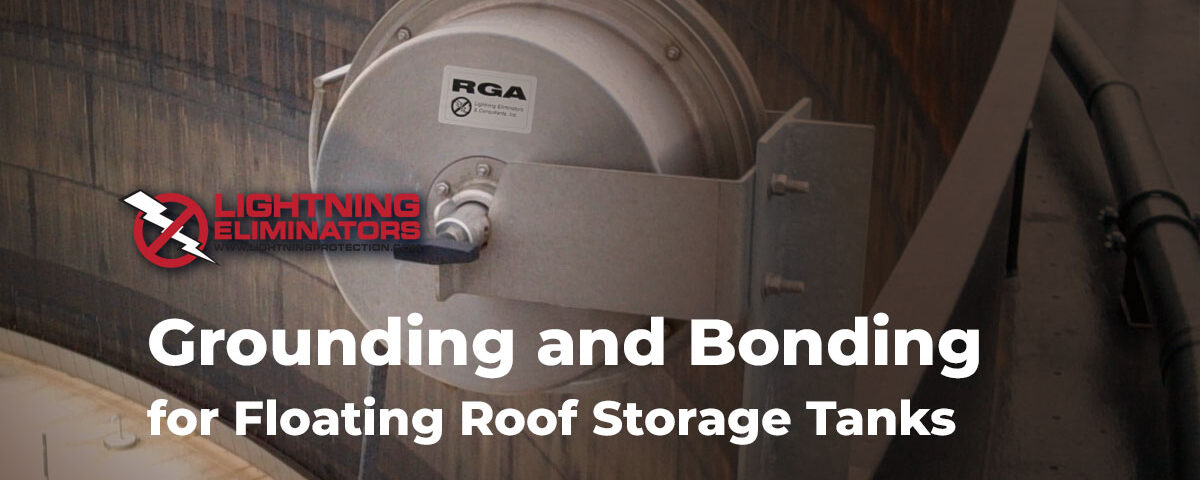
Floating roof tanks – whether internal or external – are not immune to lightning-related events. In fact, they remain highly vulnerable to:
- Direct lightning strikes
- Lightning-induced arcing across rim seals
- Static discharge events
- Ignition of flammable vapors
And when ignition occurs, consequences escalate quickly.
Every year, lightning causes fires, explosions, and costly downtime at tank farms, terminals, and refineries. In many cases, however, the real problem isn’t the strike itself, instead it’s inadequate or ineffective tank grounding that turns a predictable event into a preventable failure.
Why Is Lightning So Dangerous to Floating Roof Tanks?
When lightning strikes a floating roof tank, the electrical current must safely travel from the roof to the tank shell and then to ground. If that path is interrupted or inefficient, dangerous electrical arcing can occur at the seal between the floating roof and the shell.
This is where problems begin.
Traditional grounding methods, such as shunts, cables, or bypass conductors, often fail to maintain a consistent, low-resistance connection. Over time, corrosion, mechanical wear, and poor installation degrade performance. The results:
- Intermittent electrical contact
- Increased resistance and impedance
- Voltage buildup across gaps
- Sustained arcs capable of igniting flammable vapors
Once an arc forms in a vapor-rich environment, ignition is not just possible, it’s likely.
The Real Problem: Sustained Arcing
It’s important to understand that lightning strikes themselves don’t typically ignite tank vapors. Instead, it’s the sustained arc that follows, a continuous electrical discharge caused by poor bonding, that creates the ignition source.
When an IFRT receives a direct strike, peak lightning current strikes the attachment point in a fraction of a millisecond, but the tank shell, floating roof, and components need time to equalize in potential. During a lightning flash, which may include multiple current flows lasting more than one second, the tank may not remain at a uniform potential. Consequently, different part so the shell and roof can develop voltage differences. If the potential difference is great enough, an arc may form inside the tank between the shell and the floating roof. If the arc is sustained for a few milliseconds and flammable vapor is present, the vapor will be ignited.
The challenge isn’t just grounding the tank, it’s ensuring a permanent, low-impedance bond that keeps voltage too low to sustain an arc in the first place.
RGA, An Ingenious Solution to the Arcing Problem
The Retractable Grounding Assembly® (RGA® 750 Gen 2) is specifically engineered to solve the bonding problem at its source.
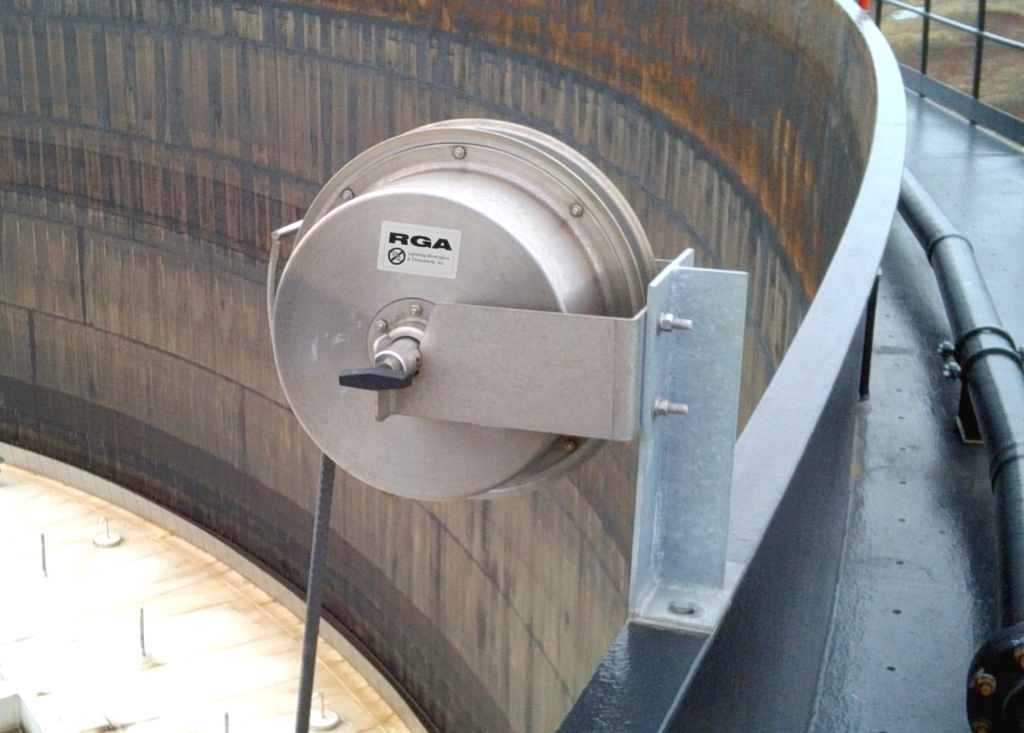
Unlike traditional grounding methods, the RGA uses a retractable cable system that automatically maintains the shortest possible path between the floating roof and the tank shell, at all roof levels.
Why the Retractable Grounding Assembly Gen 2 Matters
Electrical resistance and impedance increase with conductor length. By ensuring the cable is always at its minimum length, the RGA:
- Maintains consistently low resistance
- Minimizes impedance during transient lightning events
- Reduces voltage across the bond to near-zero levels
- Prevents the formation of sustained arcs
No sustained arc means no ignition source.
RGA Track Record of Success – Proven Performance in the Field
With over 18,000 units installed worldwide, the RGA has a long track record of protecting critical storage infrastructure.
Operators rely on it to:
- Reduce lightning-related fire risk
- Improve operational continuity during storms
- Minimize maintenance compared to traditional shunts
- Enhance overall safety for personnel and assets
The RGA is Engineered for Real-World Conditions
The latest generation, the RGA 750 Gen 2, incorporates several design improvements that make it even more robust and practical in demanding environments:
Pre-Tensioned Design. Factory pre-tensioning eliminates the need for field adjustments, ensuring consistent performance from day one.
Corrosion-Resistant Materials. The upgraded aluminum cable, originally developed for marine environments, offers exceptional resistance to corrosion, including hydrogen sulfide (H₂S), a common threat in hydrocarbon storage.
Fast, Flexible Installation. The RGA 750 Gen 2 can be installed in as little as two hours, even on tanks that are already in service, making it ideal for retrofits without operational disruption.
Low Maintenance. Unlike traditional shunts that require frequent inspection and replacement, the RGA is designed for long-term reliability with minimal upkeep.
RGA 750 meets or exceeds key industry standards, including:
- API 545 recommendations for lightning protection of aboveground storage tanks
- NFPA 780 guidelines for lightning protection systems
- API 545 requirements for bypass conductors
Easy Inspection, Long-Term Confidence
Inspection is straightforward, allowing operators to quickly verify system integrity without complex procedures. Combined with its durable design, this makes the RGA 750 a true set-it-and-trust-it solution.
The RGA Gen 2 Takes You From Risk to Reliability
Floating roof tanks don’t have to be a lightning liability. The risk is well understood, and so is the solution.
By replacing inconsistent, failure-prone grounding methods with a permanent, low-impedance bonding system like the RGA, operators can:
- Eliminate sustained arcing
- Prevent ignition events
- Protect assets and personnel
- Maintain uptime during storm activity
Why the RGA Gen 2 Stands Apart
As the original retractable grounding solution, the RGA Gen 2 from Lightning Eliminators & Consultants sets the benchmark for lightning protection in floating roof tanks.
Its patented design, proven field performance, and ease of installation make it a practical and powerful upgrade for any facility looking to reduce risk and improve reliability.
Final Thoughts on the RGA 750 for Protecting Floating Roof Tanks From Lightning Risk
Lightning is inevitable. Tank fires don’t have to be.
With the right grounding solution in place, operators can move from reactive risk management to proactive protection—ensuring their facilities stay safe, compliant, and operational through every storm.